Introduction
The Tailwind layoff news shocked the web development community. Tailwind CSS is more popular than ever, npm downloads are rising sharply, and it dominates AI-generated frontend code. Yet despite this success, the company behind Tailwind CSS recently laid off most of its team and revealed it was dangerously close to running out of money.
So how does a wildly successful open-source framework end up in financial trouble? The answer reveals a deeper, uncomfortable truth about AI, open source, and the future of developer tools.
Read about tailwind here
Tailwind Layoff: What Actually Happened?
The creator and maintainer of Tailwind CSS publicly shared that:
- Revenue dropped by around 80%
- Website traffic declined by roughly 40%
- 75% of the team was laid off
- Without layoffs, the company had only six months of runway left
This is not a case of poor product-market fit. Tailwind CSS is thriving technically—but failing commercially.
That contradiction is what makes the Tailwind layoff so alarming.
Tailwind CSS Is More Popular Than Ever
From the outside, Tailwind looks unstoppable:
- npm downloads are trending sharply upward in 2025
- AI tools default to Tailwind for UI styling
- React, Next.js, TypeScript, and Tailwind form the “AI-preferred stack”
- Component libraries and design systems rely heavily on Tailwind
If you ask an AI to style a web app, Tailwind is almost always the result.
So why the layoffs?
The Business Model Behind Tailwind CSS
Tailwind CSS itself is free and open source. The company makes money through paid products such as:
- Tailwind Plus (premium UI blocks and templates)
- Catalyst (an official UI kit, often compared to shadcn-style systems)
- Refactoring UI (a design book co-authored by Tailwind’s creator)
For years, the model worked like this:
- Developers searched Google for Tailwind documentation
- They read free docs and guides
- Some converted into paying customers
This model supported not just Tailwind, but countless open-source businesses.
AI Is the Core Reason Behind the Tailwind Layoff
The same AI boom that made Tailwind more popular also destroyed its revenue funnel.
1. Developers No Longer Visit the Docs
Instead of opening Tailwind’s website, developers now ask AI tools directly. Questions that once drove traffic now end with an instant answer—no click required.
2. AI Generates Finished Tailwind Code
AI doesn’t just explain Tailwind—it writes complete, production-ready Tailwind code. Many developers no longer need to understand Tailwind deeply or browse its documentation at all.
3. Traffic Loss Means Revenue Loss
Fewer visitors means fewer eyes on paid products. Even though Tailwind is used more than ever, the company earns less than before, leading directly to the Tailwind layoff.
The llms.txt Controversy and a Bigger Fear
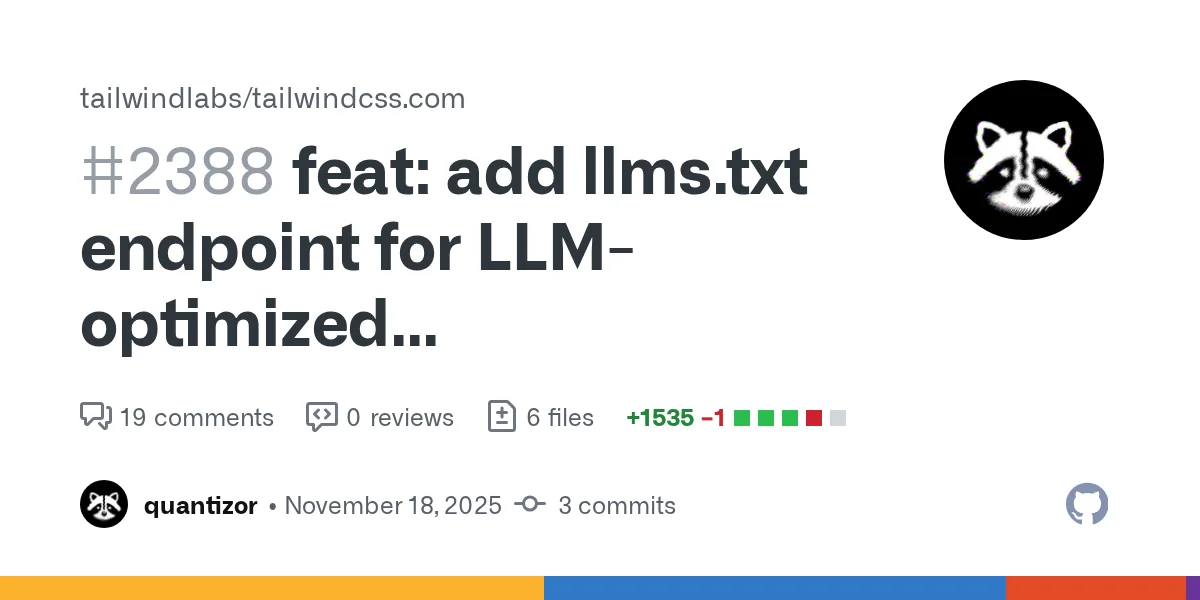
A proposal was made to add an llms.txt endpoint to the Tailwind website—something that would make it easier for AI agents to read and understand the documentation.
On paper, this would improve AI-generated Tailwind code.
In reality, it would further reduce human traffic.
The proposal was rejected, with concerns that helping AI too much could push Tailwind closer to becoming abandonware—a term explicitly mentioned by the project’s creator.
Why the Tailwind Layoff Matters to Everyone
This is not just a Tailwind problem.
- Around 60% of Google searches now end without a click
- AI tools summarize content without attribution
- Original creators receive no traffic, no credit, and no revenue
If this trend continues:
- Free, high-quality documentation will disappear
- Open-source tools will become paid or shut down
- Innovation will slow instead of accelerating
The Tailwind layoff is an early warning sign for the entire open-source ecosystem.
Will Tailwind CSS Shut Down?
Tailwind CSS itself is not disappearing anytime soon. It is too widely used and too deeply embedded in modern frontend development.
However, without a sustainable business model:
- Development could slow
- Maintenance could suffer
- Community trust could erode
That’s why the Tailwind layoff is such a serious signal—not a temporary hiccup.
How Developers Can Respond
If Tailwind CSS plays a role in your work:
- Consider supporting the project financially
- Buy Tailwind Plus or Catalyst if you can afford it
- Support sustainable open-source funding models
- Advocate for fair compensation for creators
Running a business is not greed—it’s survival.
Final Thoughts on the Tailwind Layoff
The Tailwind layoff proves a hard truth:
AI depends on open source, but open source cannot survive without income.
Tailwind CSS didn’t fail because it was bad.
It succeeded so well that AI replaced the very systems that funded its growth.
If we want powerful tools in the future, we must rethink how we support the people building them—before more projects follow the same path as Tailwind.